- #infrastructure
- #scaling
- #docker
- #fullstack
Infrastructure Scaling Paradigms: How Modern Applications Handle Growth
What works for 100 users breaks at 10,000. Docker, load balancing, and the other scaling patterns every developer and technical founder should know.
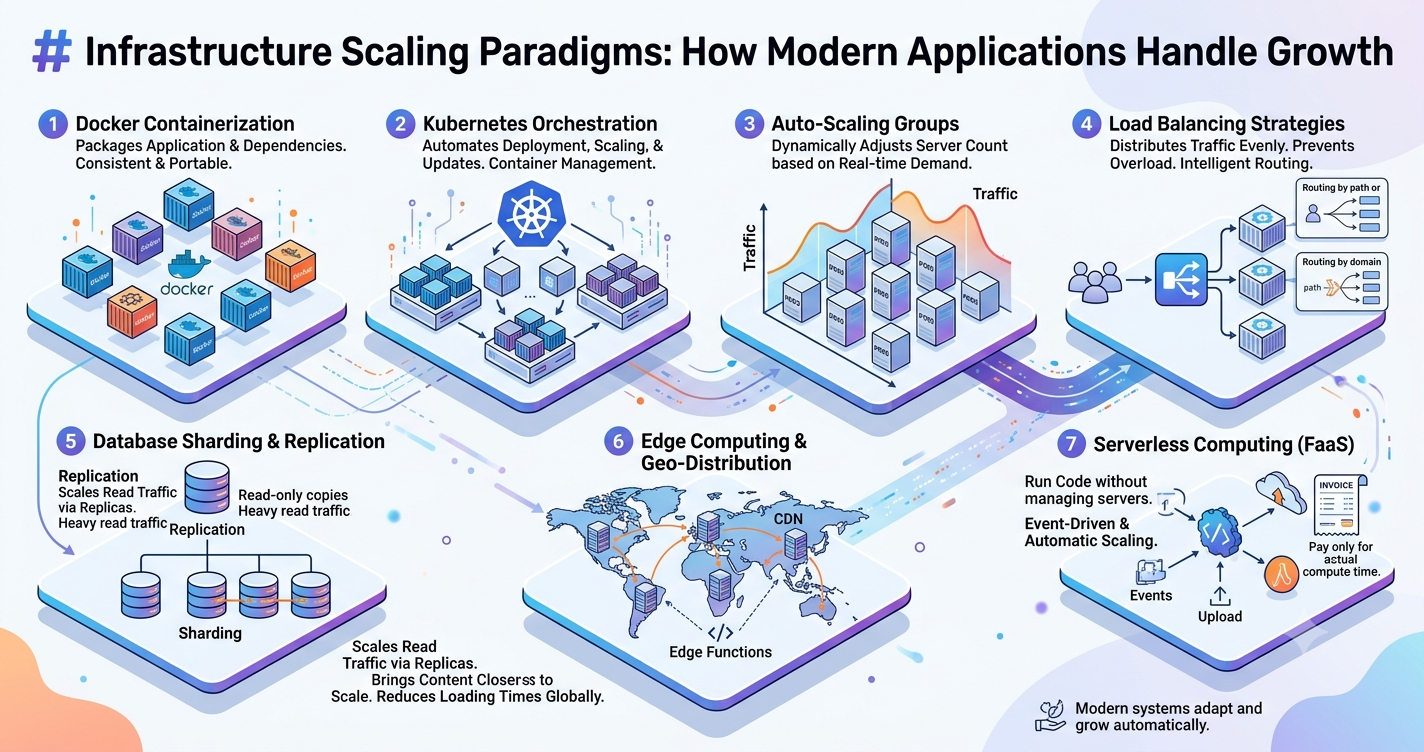
As web applications grow in popularity, one of the biggest challenges developers face is scaling. What works for 100 users can break completely at 10,000. That’s where infrastructure scaling paradigms come in. These are the proven patterns and technologies used to build systems that can grow reliably and efficiently.
Here are the core concepts every developer and technical founder should understand:
1. Docker Containerization
Docker packages your entire application with all its dependencies into lightweight, portable containers. This eliminates the classic “it works on my machine” problem and creates a consistent foundation for scaling.
2. Kubernetes Orchestration
Often called K8s, Kubernetes is the industry standard for managing containers at scale. It automates deployment, scaling, self-healing, and updates, making it much easier to run complex applications reliably.
3. Auto-Scaling Groups
Auto-scaling dynamically adjusts the number of servers based on real-time demand. Whether traffic spikes or drops, the system automatically adds or removes servers so you only pay for what you actually need.
4. Load Balancing Strategies
Load balancers act as traffic directors. They distribute incoming requests across multiple servers to prevent any single server from becoming overwhelmed. Application Load Balancers (ALBs) can even route traffic intelligently based on URL paths or domains.
5. Database Sharding & Replication
Replication creates read-only copies of your database to handle heavy read traffic. When that’s no longer enough, sharding splits your data across multiple databases, allowing your system to scale horizontally as your user base grows.
6. Edge Computing & Geo-Distribution
Edge computing brings your content closer to your users. Using CDNs and edge functions, you can dramatically reduce loading times and improve performance for users around the world.
7. Serverless Computing (FaaS)
Serverless lets you run code without managing servers. Platforms like AWS Lambda automatically scale and you only pay for the actual compute time used, making it perfect for event-driven workloads.
Conclusion
Modern infrastructure is no longer about managing individual servers — it’s about building systems that can adapt and grow automatically. Whether you’re a solo developer or part of a large team, understanding these scaling paradigms helps you make smarter architectural decisions and build more resilient applications.
community rating
$ ls ./comments
sign in or create an account to rate and comment.
no comments yet, be first.